Monday, December 12

My new site, The Turning Page!

I have exciting news to share! I now have a new website, The Turning Page! This means that I'm going to be retiring this blog. But no need to be sad!

The Turning Page will be very similar to the blog I've had here on Blogger, but will (hopefully) be updated more often and include not only book reviews but also my thoughts on movies and just life in general. I would love for you to check it out, comment, and tell me what you think!

Sunday, December 11

Possession

After reading "Possession," I truly do not have a clue why I've never read the author A.S. Byatt before. This is the first novel in a long time that has left me begging for more. I don't think it would be an exaggeration to say that Byatt has reminded why I'm so in love with the written word.

Now that I've sung its praises, I should explain what "Possession" is about. The novel follows Roland Michell and Maud Bailey, two scholars of Victorian poets Randolph Henry Ash and Christabel Lamotte, who are thrown together unexpectedly when Roland discovers letters that link Ash and Lamotte. Through further investigation, Roland and Maud uncover that Ash and Lamotte were having a secret affair despite Ash being married and Lamotte having a lesbian lover. Knowing full well what a revelation of this kind would do to the world of academia, Roland and Maud set out to find as much as they can of Ash and Lamotte's letters, determined to see how their love story ended.

The beauty of this novel is that it crosses so many genres in its 555 pages. Even though Ash and Lamotte are fictitious poets, Byatt includes selections of their poetry and stories throughout "Possession." Letters and journals of various characters also pepper the book's pages. Despite "Possession" being a hefty read, it doesn't feel that way with the variety in writing style.

I couldn't put this book down until I finally found out what happened to Ash and Lamotte. Despite "A Romance" being in the novel's title, it also had all the traits of a good mystery as well. Male readers, don't be deterred! You may be happily surprised.

P.S. Some of you may be familiar with the movie version of "Possession" that was made in 2002. Although I think the novel is far superior, it's worth checking out.

Jennifer Ehle as Lamotte & Jeremy Northam as Ash

Saturday, November 5

Major Pettigrew's Last Stand

If you've been a follower on my blog for a little while, you may have noticed I'm playing around with its layout/design. This is as far as I've gone with it for now (as you can probably tell from my lack of posts recently, I've been a little preoccupied with other things). If you have the time, let me know what you think and give me your suggestions!

Anywho, this blog is about the last book I read called "Major Pettigrew's Last Stand" by Helen Simonson. It's a comedy of manners in the vein of Austen set in the tiny village of Edgecombe St. Mary in the lovely English countryside. Major Pettigrew is retired, a widower, and lives for a good cup of tea. Mrs. Ali, the Pakistani shopkeeper in the village, is quiet, intelligent and also widowed. Despite their many differences, the two slowly find a friendship and eventually love with each other. But in as small a place as Edgecombe St. Mary, everyone knows about everyone else's business and no one is too pleased with this new love interest of the Major's. The underlying question throughout this book is whether the Major and Mrs. Ali's love can stand up to the pressure of such vast differences in culture and society.

Despite the plot being fairly predictable, this was an unconventional love story that I rather enjoyed. If you're looking for a steamy romance, this isn't it. But "Last Stand" more than makes up for it in sweetness as well as hope for those who think love has passed them by.

Tuesday, August 30

"Battle Hymn of the Tiger Mother"

Chances are you've heard of the last book I read, "Battle Hymn of the Tiger Mother" by Amy Chua. There has been a lot of controversy surrounding this book and the Yale law professor who wrote it. Many have taken this book as a "how-to" parenting guide, which according to Chua is not how it is supposed to be read at all. She says that it is simply a memoir of her ups and downs in the realm of child-rearing and ultimately her realization that trying to be a "tiger mother" doesn't always work.

I really enjoyed this book. It was a fast read and had a lot of quite funny moments to it. Maybe it helps that I'm not a mom and can't be offended by Chua's comments about Western parenting... She made a lot of good points though about parenting today. I agree with her that up until a certain age, children shouldn't have a choice when it comes to most issues. What Mom and Dad says goes, and if you don't like it, then too bad. As my dad used to say to me and my siblings, "Life's tough." Although Chua sometimes takes it to the next level (threatening to burn your daughter's stuffed animals if she doesn't play her piano piece perfectly is taking it a little far in my opinion), her love for her daughters is apparent and I think it comes across that all she wants is what's best for them.

I'd be curious to hear what you think, especially all my parents out there. Do you agree with Chua or think she's just plain crazy?

Here's an interview with Chua where she explains her perspective a bit more:


Monday, August 8

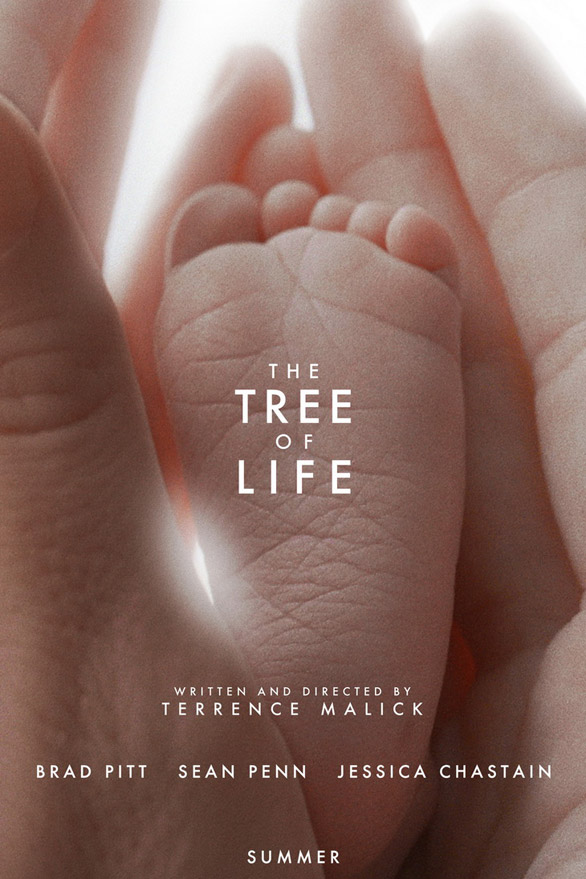
The Tree of Life

I am going to break the rules of my own blog and review a movie- *gasp*! But before you get too shocked, I'll tell you my reasons for doing so.

Terrence Malick's "The Tree of Life" was, for me as a writer, a wonderful study in the many different ways there are to tell a story. Malick wasn't afraid to push the boundaries with this film, which is probably the reason why it has received such mixed reviews. Just go out and ask a few people who saw it what they thought. You'll probably get a lot of different responses, ranging from "Malick's a genius" to "I didn't get it. All of a sudden there were dinosaurs on the screen- WTF??"

Everyone knows when they are learning how to write that stories are supposed to have a beginning, middle, and an end with the climax preferably coming somewhere in the later middle section. It's called basic plot development. This is not so with "The Tree of Life." If you're one of those people who needs a clear narrative and all the loose ends tied up, chances are you won't like this film.

Now, I'm married to a guy who went to school for film and I've learned many things about the technicalities of what makes a good movie from him. One of them is that voice-overs are VERY hard to pull off well. Too many directors use voice-overs to slap the viewer across the face with the far too obvious or to manufacture a response from the viewer by telling them how they should be feeling. Needless to say, I'm not a fan of either of these. That said, Malick used voice-overs quite a lot but in a way that, for the most part, I appreciated. Others may disagree though, like one of my local movie critics who called it "overdressed melodrama." It's very subjective.

Chastain & Pitt
I'm coming to the one aspect of the movie that I couldn't really come to terms with. The plot revolves around a father and mother with three sons in rural Texas, the father (Brad Pitt) being overpowering borderline abusive and the mother (Jessica Chastain) falling into the nurturing but silent stereotype. And it is this stereotype that bugs me. Despite the mother being portrayed as this saint-like figure who loves her children and would do anything for them, she doesn't have a spine. When her husband yells at her or her kids, she never gives a response. Who knows, she may have good reason for this, but it is never looked at in-depth. Her character is not developed in the least whereas Brad Pitt's father figure is delved into in what for this film was great detail.

With all of this said, "The Tree of Life" is a movie with spectacular cinematography and excellent acting. It is well worth seeing just to be able to experience film in a way you may never have before. Although I believe it is impossible to truly capture life on a screen, "The Tree of Life" was a valiant effort and Malick should be applauded not only for a beautiful movie but also the unconventional means he took to convey a story.


Wednesday, August 3

Still Life with Woodpecker

It's hard to know where to even begin when describing the book "Still Life with Woodpecker" by Tom Robbins. It's about a princess and an outlaw who fall in love against all odds. And it's about a pack of Camel cigarettes. "Still Life" combines the philosophical, imaginative, and sociological aspects of life and rolls them all together.

Tom Robbins is quite the character and after reading an interview with him, I began to understand where he's coming from a little bit more. I loved his explanation of what he tries to do with his writing:

     "What I try to do, among other things, is to mix fantasy and spirituality, sexuality, humor and poetry in combinations that have never quite been seen before in literature. And I guess when a reader finishes one of my books -- provided the reader does finish the book -- I would like for him or her to be in the state that they would be in after a Fellini film or a Grateful Dead concert. Which is to say that they've encountered the lifeforce in a large, irrepressible and unpredictable way and as a result their sense of wonder has been awakened and all of their possibilities have been expanded."

"Still Life" was a perfect summer read for me and I really enjoyed it (despite initially being confused when I started the book on where it was all going!). I would love to hear your comments on "Still Life" and for those of you who've read Robbins' work, suggestions for my next Robbins adventure!

Wednesday, June 8

Bachelor Girl

Listen up, ladies, 'cause this one's for you! If you're looking for a fascinating read about the history of American single women, "Bachelor Girl" would be an excellent choice. The author, Betsy Israel, who was a former columnist for Glamour as well as a contributor to the New York Times and Vogue among others, gives a concise and entertaining look at the lives of single women throughout the entire twentieth century and what exactly it means to be a "spinster" or "old maid."

There has always been a stigma attached to either of the above-mentioned terms for older women who have never wed, but do we know how this actually came to be? Israel explains this and many other related topics in her book with academic writing and footnotes while also using interviews with women from different generations to add an anecdotal spice.

The book is broken up into chapters each focusing on a different decade and what single women had to face during that time. After reading "Bachelor Girl," I began to realize how far women really have come. It's hard for us younger women to remember a time when it was not encouraged for a woman to have any career other than wife and mother, but such a time existed only about fifty years ago. Example of this (from a female advice columnist, about 1954): "Every American girl must acquire for herself a husband and a home and children... any program for life in which the home is not the center of her living, is worse than death." Whoa.

 I have no problem with women wanting to get married and have kids- I'm married myself. But that is not every woman's dream and it doesn't have to be. Single women should be able to be single without harassment or questions ("So when are you finally going to tie the knot?"). I really liked how Israel ended the book: "There have been too many epitaphs for the single woman, and almost every one of them is pathetic. She is not."

Amen, sister!

Monday, May 30

The Family Man

Happy Memorial Day! In my eyes, it is now officially summer and that calls for lighter fare in reading, which is why "The Family Man" by Elinor Lipman was the perfect book to start that trend for me. It is a cute and at times humorous family novel that I thoroughly enjoyed despite at times its lack of depth.

One of the reasons I like "chick lit" is that it never tries to be something that it isn't. When I pick up a book in this genre, I know exactly what I'm going to get and based on this criteria, "The Family Man" delivers. Although this is the only book of Lipman's I've read, I've also seen the movie "Then She Found Me" based on one of her more popular books. I didn't really enjoy the film version but after reading "The Family Man," there's no doubt in my mind that its book counterpart is most likely the better of the two.

The story follows Henry Archer, a divorced gay man who has lost touch with not only his ex-wife but also his once beloved step-daughter Thalia, who he lost in a complicated custody battle almost twenty years ago. Due to a series of spectacular circumstances though, Henry finds himself not only back in Thalia's life but also letting her live with him in his large Upper West Side townhouse. What ensues is a hilarious story of a lonely man and the salvation of sorts that he finds when he allows himself to love someone again.

This was a fun and fast read for me, something that I enjoy every once in a while especially after forcing myself to plow through more weighty novels. If you're looking for a light summer read, this is the book for you.

Sunday, April 10

Freedom: A Novel

I just finished "Freedom: A Novel" by Jonathan Franzen and what a roller coaster ride of a book it was! For once, I am not quite sure where to begin, but I will try.

I will start by saying that this book is by no means perfect as some endorsements may have you believe (ahem, Oprah Winfrey). There are long-winded paragraphs fraught with highly politicized talk that give a very distinct air of preachiness. Considering that the novel weighs in at a hefty 562 pages, it could have done without that.

The real strength of the novel lies in its character development. Despite these people being really messed up (and I mean really messed up), you can't put this book down. There's something you see in the characters that grabs hold of you and won't let you go. Yes, these people have huge problems and they're selfish, heartless, you name it. But there is still a humanity in them. And for that reason, you as the reader hope against hope that somehow it will all work out.

I'm not even going to try to summarize "Freedom" (if you want that, here is a NY Times article worth looking over). But I will say that the reason I kept reading was purely to see what happened to the two main characters, Walter and Patty Berglund, who after a series of spectacularly horrible events end up separating. Without giving away anything, I'd like to share a line describing Walter and Patty's relationship that struck me: "...they were not just the worst thing that ever happened to each other, they were also the best thing."

Do you think that the worst thing for you can also be the best thing? In Walter and Patty's case, you'll just have to read the book to find out.

Friday, March 11

Finding Calcutta: What Mother Teresa Taught me About Meaningful Work and Service

Eli and I recently went to a Veritas Forum at Carnegie Mellon given by Dr. Mary Poplin titled "Radical Marxist, Radical Womanist, Radical Love: What Mother Teresa Taught Me About Social Justice." Intriguing to say the least.

After hearing Poplin speak, I decided I had to get her book to learn more about her journey from being a feminist/pantheist/secular humanist to becoming a devout Christian working with Mother Teresa in Calcutta. "Finding Calcutta" is a wonderful book in both the spiritual and academic senses. Poplin brought her experience as a professor to her writing and the result is a book that is well-researched but also profoundly relatable.

 The book is divided into small chapters, each giving a little glimpse into life as a Missionary of Charity in Calcutta. In one of the earlier chapters titled "Whatever You Did for the Least of These, You Did for Me," Poplin talks about how blown away she was by the sisters' approach to those they served:
 
     I began to think how differently I would work if I truly saw each person I met as a hungry, hurting Christ. What if every time someone came to me with a problem, I responded as though Christ himself had approached me? What if I saw everyone all day long as in need of a touch from God, and what if I were yielded enough that God could actually use me to give his touch? (40)

This book truly convicted me. The work that Mother Teresa did and that the Missionaries of Charity continue to do is just astounding. They not only serve the poor, but they also live like the poor. They have given up everything worldly this earth has to offer in order to live the way Christ would have them.

Now, if you're like me, about this point (if you're honest) you're going, "OK, I could never live up to that." There's still hope for us though! Mother Teresa is known for saying, "Find your own Calcutta. Don't search for God in far-off lands. He is close to you, he is with you." For Poplin, that meant going back to her teaching position at Claremont Graduate University with a fresh perspective on Christianity and the way it should be presented in the university setting.

I especially liked one of the closing paragraphs of "Finding Calcutta" and I'm going to leave you with that:

     Mother Teresa answered her call to love the most unlovable of people. There is no reason to romanticize the poor just because we make the mistake of romanticizing the rich. The people the Missionaries serve are difficult, just as you and I are difficult, yet their needs are more desperate. The divine love of God working through her drew us; her ability to love when there was no natural reason for it attracted us to Jesus (160).

Saturday, February 12

Wolf Hall

I recently finished "Wolf Hall," the Man Booker Prize winner by Hilary Mantel focusing on Thomas Cromwell's rise under Henry VIII's reign. The book gave an interesting perspective from a man who has mainly been construed in history as power-hungry and incredibly manipulative.

Despite Mantel taking some liberties in her novel in order to gain readers' sympathy for Cromwell (such as making his blacksmith father a cruel and abusive man), I found her account through Cromwell's eyes very compelling. It was unheard of in those days for a man of his social class to rise up to become an earl and close counselor to the King of England. He had his hand in Henry's separation from Catherine of Aragon as well as his remarriage to Anne Boleyn, laying the groundwork for the king to become the head of the church as well as state.

Another aspect of the book I enjoyed was Mantel's writing style. It is very unique if a little hard to get used to at times. She continually uses the pronoun "he" without explaining which "he" she is referring to. Most of the time, Cromwell is speaking since he's the protagonist, but it can be confusing keeping track when Cromwell is conversing with other men.

If you're interested in reading a far better account of this book, here is a New Yorker article about "Wolf Hall" that I found quite good.

On to another topic, I just began watching the first season of "The Tudors" and am excited to now feel like I know somewhat of the characters in the show. It sort of throws me off how attractive everyone is (especially Henry himself, who in reality was good-looking but definitely no Jonathan Rhys Meyers). But I will press onward, at least until Cromwell makes an appearance.

Sunday, December 19

Charlotte Bronte vs. Jane Austen

I am now reading "The Secret Diaries of Charlotte Bronte," a fiction by Syrie James written through the eyes of Charlotte Bronte as she and her sisters are embarking on their literary careers. A good part of the book also focuses on her romance (or lack of, so far) with Arthur Bell Nichols, the man she eventually married.

The part of the book I want to focus on now though is the appendix, which might seem strange but I have good reason for doing so. It includes several letters of Charlotte's which the author used to aid her research. The one that caught my eye was a letter Charlotte wrote about her opinion of Jane Austen's "Emma." Personally, I think it's amazing and would like to share some of it with you:

     "...what sees keenly, speaks aptly, moves flexibly, it suits her [Austen] to study, but what throbs fast and full, though hidden, what the blood rushes through... this Miss Austen ignores... if this is heresy- I cannot help it."

Earlier in the letter, Charlotte also says that "the Passions are perfectly unknown" to Austen and that "even to the Feelings she vouchsafes no more than an occasional graceful but distant recognition."

To clarify, I love Jane Austen and greatly admire her works. But I have to admit that I enjoy watching movies based on her novels more than actually reading them. Why? Because I can emotionally connect with the characters the way they are portrayed in the films better than I can on the page. Reading Austen, I can't feel Darcy's love for Elizabeth emanating from his entire being the way I can when Colin Firth's eyes burn a hole through my screen.

Despite the dramatic and far-fetched love story in Bronte's "Jane Eyre" (how many governesses actually married their employers in those days?), I can't put the book down. Jane and Mr. Rochester's quiet love for each other and desperation when they realize that they can't be together are so palpable that it brings tears to my eyes. That is the passion and feeling that are missing in Austen's work.

Comments?

Wednesday, September 22

The Girl with the Dragon Tattoo

"The Girl with the Dragon Tattoo" by Stieg Larsson is one of the most compelling novels I've read. Now, I have to say that I am not usually one to jump on the bandwagon of international best-sellers. Not that I think best-sellers are bad, but sometimes I'm just too much of a book snob to resign myself to reading what everyone else is reading, too. But "The Girl with the Dragon Tattoo" deserves the widespread accolade it has been receiving. The plot moves at the perfect pace, the characters are well-developed (especially Lisbeth Salander) and the novel thrills while also bringing up gritty yet socially pertinent issues.

Since most of you have probably already read the book or had the plot explained to you dozens of times by enthusiastic friends (such as myself), I won't go into a full plot description. Instead, I am curious what you think about the book or movie if you saw the recent Swedish film version of the novel. After watching the movie with Eli, we talked for hours about justice, a theme brought up particularly in one scene. As disturbing as this scene was, it depicted a harsh reality that I had never really stopped to think about. It was sombering and horrifying at the same time.

What are your thoughts?

Friday, May 14

36 Arguments for the Existence of God

Yes, I am finally writing another review, and I'm really coming back with a bang this time! I recently finished "36 Arguments for the Existence of God" by Rebecca Goldstein and was that an interesting read or what.

First, to give a little background of the author-- Rebecca Goldstein got her Ph.D. in philosophy from Princeton University and is married to Steven Pinker, the well-known experimental psychologist/cognitive scientist/author of popular science. If you'd like to watch a video of Pinker interviewing his wife on her book, Amazon has it posted here under "Check Out Related Media." 

Now, to talk about the book itself-- "36 Arguments" is a work of fiction, not a non-fictional work trying to argue for or against the existence of God as the title may suggest. Goldstein's atheistic beliefs and Jewish upbringing clearly influenced the themes in the novel. "36 Arguments" contains many satirical elements referring to religion, science, and how people wrestle within these arenas. Since this is the sort of book I'm more interested in sharing my opinion about than summarizing the plot for, here is a snippet from the book's jacket just to give you an idea of what it's all about:

"At the center: Cass Seltzer, a professor of psychology whose book, The Varieties of Religious Illusion, has become a surprise best seller. He’s been dubbed 'the atheist with a soul,' and his sudden celebrity has upended his life. He wins over the stunning Lucinda Mandelbaum–'the goddess of game theory'–and loses himself in a spiritually expansive infatuation. A former girlfriend appears: an anthropologist who invites him to join in her quest for immortality through biochemistry. But he is haunted by reminders of the two people who ignited his passion to understand religion: his teacher Jonas Elijah Klapper, a renowned literary scholar with a suspicious obsession with messianism, and an angelic six-year-old mathematical genius, heir to the leadership of an exotic Hasidic sect. The rush of events in a single dramatic week plays out Cass’s conviction that the religious impulse spills out into life at large."

I felt empty after finishing "36 Arguments." It was well-written and had wonderfully developed characters, but the content was disappointing to me. The middle of the book lagged and there was a major inconsistency with the main character towards the end (who just forgets they're going to debate a Nobel Laureate at Harvard?!).

Even though I am not an atheist, I was intrigued to read a book from the perspective of a fictional character called "the atheist with a soul." Cass is a somewhat relatable guy to read about, but I didn't find him as likable as he may portrayed to be. To me, he came off as a man still searching for the answers in the wrong places (case in point: his infatuation with the self-obsessed Lucinda). And when towards the end of the book he debates someone on the existence of God, he uses an argument against Christianity that really irks me. From my perspective, it portrayed his own selfishness in a whole new light. 

But I would love to hear what you think! This book invites reflection and spurs discussion on realms central to human existence. Read the book and it's appendix, and you'll see why. 

Thursday, April 1

Where is... Lauren?

Today I realized that it has been more than a month since my last post! I'm not sure who's reading this or if anyone really cares about my absence from the world of blogging, but I care. I love being able to get my thoughts out somewhere instead of keeping them jumbled in my brain. Thus my reasoning for almost daily reciting out loud my to-do list to my husband (sorry, honey!).

My lack of presence in the blogosphere can be attributed to the fact that I'm now working two jobs as well as volunteering pretty regularly at my local Ten Thousand Villages. All good stuff just not the best as far as allowing me time to read and blog!

So, to give a quick update, I am currently almost halfway through "Germinal" by Emile Zola. That might not sound like a lot but this is thick literature in both the intellectual and physical senses (my paperback version is 497 pages). I won't give a synopsis yet but I will say that this book has begun to open my eyes to the horrible working conditions of the lower class in mines during the Industrial Revolution. You always hear about how horrendous the factories and mines were during that age, but I do not think you can completely grasp that concept until you read a detailed account of it.

"Germinal" is fictional but based on Zola's keen observations of the conditions of mining workers. Over and over I find myself cringing as I read, blown away by what these people put up with. All you unhappy employees, read this book and you'll be feeling much happier about your job. I guarantee it.

Thursday, February 25

Service Included: Four-Star Secrets of an Eavesdropping Waiter

This was one of the fastest and most fun reads I've had in awhile. In "Service Included," Phoebe Damrosch writes about her life as one of the only female captains (a.k.a. waitresses) at the posh restaurant Per Se in New York City. Her knowledge of food was impressive and it was obvious that she's passionate about serving people some of the best food they will ever have in their lifetimes. As a former waitress, this book was very relatable. I've read a few memoirs by women who at one point in their lives claimed this underappreciated profession as their own, but I think that "Service Included" was my favorite for its brutal honesty and peek into a world so unlike my own.

Per Se is only one of renowned chef Thomas Keller's dining ventures. He also owns The French Laundry in California as well as Bouchon Bistro and Bouchon Bakery with locations in Las Vegas, New York and California. To say the least, Keller has been very successful.

Honestly, I don't know how Phoebe was hired to work at Per Se with her only experience being two stints working in smaller bistros in Brooklyn. I'm guessing that her wit and smooth talking had something to do with it. Some may think her narration is annoying because of her strong liberal leanings and heavy sarcasm, but I enjoyed it. Granted I don't agree with all of her opinions, but I can appreciate her sincerity and passion. 

"Service Included" is not only career-related to Phoebe's life. It also follows her love life as a single 20-something in New York City. Eventually, she starts going out with Andre, a sommelier (if you don't know what that is, it's the resident wine expert of a restaurant). Since they both work at Per Se, they have a lot in common and seem to have chemistry. You'd have to read the book to find out what happens between them, but I will say that I didn't really like his character despite Phoebe's obvious love for him.

"Service Included" made me miss the restaurant business. When Phoebe described the pumping adrenaline her job brought her and the satisfaction of finishing a shift at two in the morning, it reminded me of my walks home after working at my town's local cafe with my hard-earned tips snug in my pocket. Despite the daily demanding customers and usually thankless work, there is still nothing like working as a waitress and the rush it brings.

Thursday, February 18

Cheerful Weather for the Wedding

"Cheerful Weather for the Wedding" by little-known Julia Strachey was originally published in 1932 but has been sorely overlooked until it was reprinted last year as a Persephone Classics paperback. I honestly had never heard of Strachey but after reading the following snippet of a description of the novel, I was intrigued:

"Waylaid by the sulking admirer who lost his chance with her, an astonishingly oblivious mother, and her own sinking dread, the bride-to-be struggles to reach the altar with the help of a bottle of rum" (taken from the back cover of the 2009 print).

This bride-to-be is Dolly, a privileged young woman preparing to marry the Hon. Owen Bigham and follow him to South America where he is in the diplomatic service. The novel takes place all in one day, Dolly's wedding day.

"Cheerful Weather" is in turns amusing and somber. Dolly's family are ridiculous characters that produce quite a few laughs with their silly antics. The somber part is that Dolly obviously is not in love with the man that she's about to marry and must drink almost a full bottle of rum before she can bring herself to walk down the aisle.

The "sulking admirer" is Joseph who Dolly spent a euphoric summer with on his private boat. Joseph never declared his love for Dolly though and struggles with this fact throughout the book. If you have ever liked someone but not had the guts to tell them so, you will easily relate to Joseph's troubles.

Strachey wrote only two novels, "Cheerful Weather" and "The Man on the Pier." She led a very interesting life, working as a model, photographer and writer. She married two times, each one ending badly. Besides her novels, Strachey also wrote an autobiography with her best friend Frances Partridge.

I fairly enjoyed this small novel at 119 pages. There were Virginia Woolf-esque descriptions, laugh-out-loud sections and romantic intrigue, enough to keep me turning the pages. The one thing that just didn't fit was a surprise thrown in towards the end that in some ways shed more light on the main character but with such blurry details that it was more of a shock than anything else.

Although this was by no means my favorite novel, it was well worth reading for its excellent character studies and apt descriptions of the time. I may even have to check out Strachey's autobiography "Julia: A Portrait of Julia Strachey" to find out more about the eccentric woman behind the novel.

Friday, February 12

Beg, Borrow, Steal: A Writer's Life


Michael Greenberg, a columnist for the Times Literary Supplement, produced a very entertaining and at times poignant book when he compiled stories from his Freelance column to create "Beg, Borrow, Steal: A Writer's Life." Each of the 44 chapters is a short story approximately 4 pages long, making this book quite a fast read.

The title and artistic rendering of a book on the cover are what first caught my eye and convinced me to pick this book up. I was led to believe from the description on its jacket that it had more to do with Greenberg's life as a writer as opposed to his personal life. After reading a few stories though, I found this to be incorrect. "Beg, Borrow, Steal" are the writings of someone who is inspired by the occurrences in a New York City resident's life as well as by the Big Apple itself. Only a handful of the chapters actually pertain to his life as a writer, which includes the at times hilarious "Everything I Hate in Fiction," a relatable tale for every writer of being utterly rejected by an editor.

Even though the stories didn't have as much to say about the technicalities of writing as I expected, I still enjoyed them thoroughly. One of my favorites was "Dachshund" about Greenberg's dog named Eli (a name I have a particular affinity for). The story follows Greenberg day by day as he tries to find a new home for his furry friend due to Eli's dislike of children, which does not exclude Greenberg's 4-year-old son.

Another funny story was "The Importance of Pronouns," a story about the night Greenberg's wife brings home a transexual coworker for dinner. Greenberg sets about taking vigorous notes on their visitor in order to "get his language right" and is promptly told that it is "her" not "his" (thus the title). 

There is the occasional poignant story as well including accounts of his difficult relationships with his father and brothers, his divorce, new marriage and daughter's manic breakdown. After reading "Beg, Borrow, Steal," you feel like you've really come to know the author as not only a writer but also as a father, husband, brother, son and friend. Greenberg is a writer to take note of for his honestly portrayed compelling tales.

Saturday, January 23

The Elephant Keeper


I just finished another one of the many books I received for Christmas called "The Elephant Keeper" by Christopher Nicholson. Of its 298 pages, I enjoyed maybe 294 of them. I will explain.

The book is about a stable boy, Tom Page, who begins raising two elephants for his master when they are bought for the family estate. Tom forms a special bond with the elephants and names them Jenny and Timothy. For reasons later revealed, Timothy does not stay in the picture for long but Jenny becomes an inseparable friend to Tom.

I read a great Amazon customer review that compared "The Elephant Keeper" to "Black Beauty" by Anne Sewell, one of my favorite books growing up. Both novels follow an animal's life closely as it moves from place to place and the hardships that come in its way. The big difference between the two though is that "Black Beauty" is told from the animal's point of view while "The Elephant Keeper" is from the perspective of the animal's trainer. "Black Beauty" rings so thoroughly with sincerity that the reader easily forgets it is a horse who is narrating. "The Elephant Keeper," however, is harder to believe even though it's from a human's point of view.

Despite some inconsistencies in Tom's character and a rather slow-moving plot, I really enjoyed this book. That is until the last chapter. In this chapter, the author proceeds to try to wrap up the tale in a bizarrely confusing way. I reread it just to make sure I hadn't missed something, but no, I hadn't. It really just didn't make sense.

One of the most frustrating things to me as a reader is when the author doesn't finish a novel well. It's as if they just gave up despite all the hard work they put into writing the book in the first place. I groaned with despair and threw "The Elephant Keeper" onto the ground after finishing it. And I then began to unload on my husband everything Nicholson and his editor had done wrong with the ending. It's my opinion they could have cut out the entire last chapter and it would have been a much better book. But maybe that's just me.

If you want some other opinions on "The Elephant Keeper," check out these reviews by the Washington Post and The Independent.

Saturday, December 19

Bonjour, Tristesse

So, I have decided to continue my blogging even though it's no longer required for class since I'm now a GRADUATE! It's rather a strange feeling no longer being a student, but I'm hoping that it will allow for me to read more as well as give me the freedom to choose any books I want (not based on required reading). How exciting!

And now, I will give my first review as a college graduate. The book is Bonjour Tristesse, meaning in French "Hello Sorrow." It was written by Sagan at the tender age of 17 and published by the time she turned 18. Despite her youth, Sagan produced a well-written, somewhat existential work about a 17-year-old French girl named Cecile and the carefree life she leads with her widowed and rich father.

Then Anne, an old friend of her mother's, comes into the picture and steals Cecile's father's heart, causing him to leave his young mistress (of which he's had many) and decide to marry Anne. This leaves Cecile confused as she thought that she and her father would continue with their "not a care in the world" lifestyles forever. She begins to plot with her summer love Cyril and her father's jilted mistress Elsa on how they can subtly get rid of Anne. Too late though, Cecile realizes that she has gotten herself too far into something that she can't turn back from now.

At about 180 pages, this was a very quick and enjoyable read. The plot intrigued me, despite being fairly predictable (at least to me). Every once in awhile, I would read a line and think to myself, "I can't believe a 17-year-old wrote this." Sagan grew up in almost identical conditions to Cecile, which is probably the reason why her characters are so believable. She convinces her readers thoroughly in the way she portrays Cecile's thoughts and motives that this is a girl who honestly just doesn't know what she wants. And who can say they've never experienced the same thing? The harsh yet universal truths about mankind and its selfishness are portrayed perfectly in this book and are what has made it into Sagan's most successful novel out of the thirty-plus she wrote.